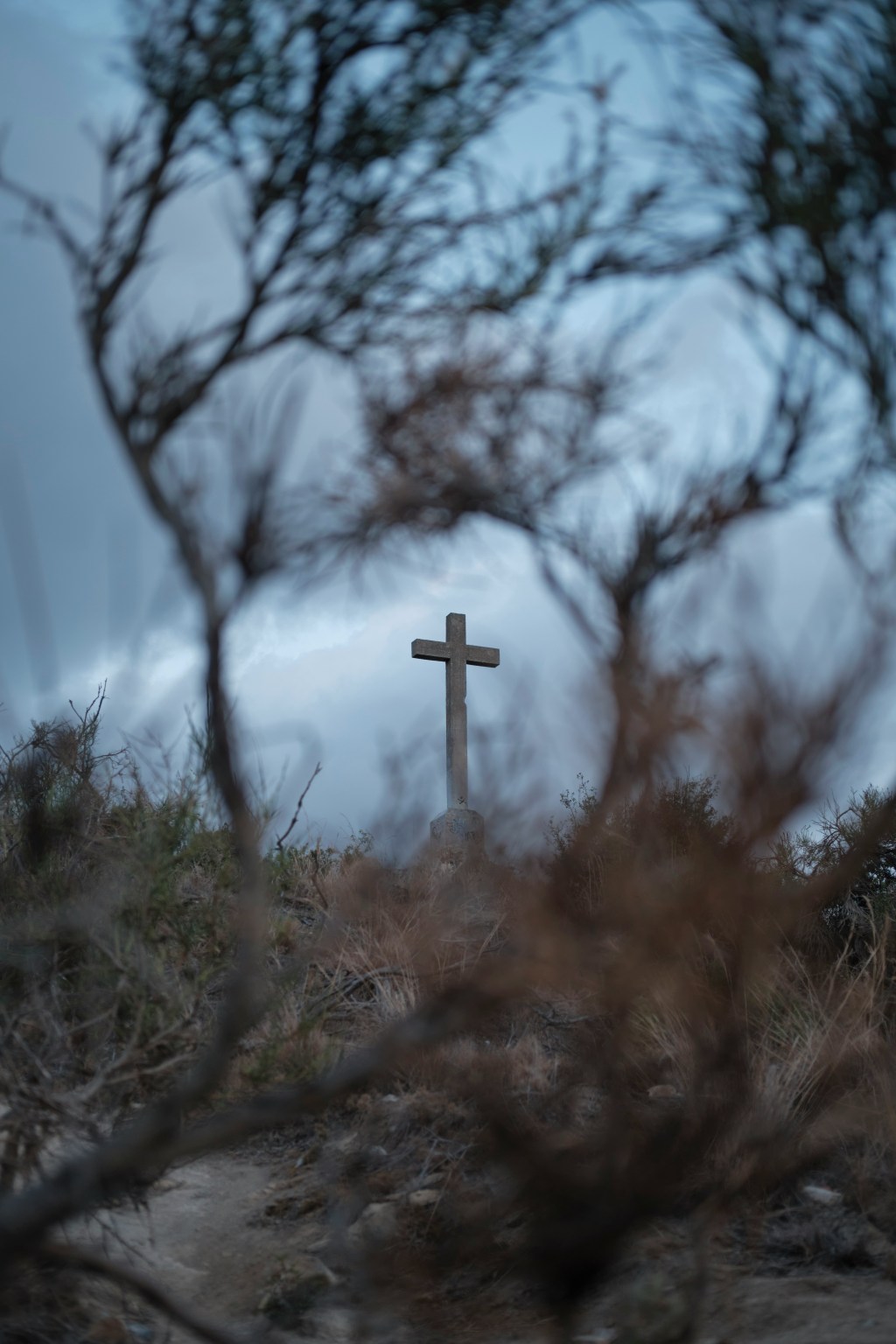
A Requiem of Faith
I recently wrote about my loss of faith and why that loss should matter to Christians. Not because I imagine my story to be unique, but precisely because it is not. It belongs to a growing chorus of quiet departures, people slipping out of pews and into a wider, lonelier, but somehow truer world. In that earlier essay I tried to distil the reasons for this exodus into three truths that, once seen, are difficult to unsee. First, many no longer believe Christianity is true. Second, many no longer believe it is good. And third, whatever sense of community once bound them to the Church has either disintegrated or been replaced by something more genuine elsewhere. My focus then was on the second point, the moral failure of Christianity to be what it claims to be. The good news.
That failure, I argued, is not incidental but structural. It is baked into the very moral grammar of the faith. At its centre lies a doctrine of atonement that calls the suffering of an innocent man redemptive. It is presented as a cosmic bargain in which injustice is not undone, but sanctified. This is the twisted poetry at the core of Christian morality, that the blood of the blameless should purchase the pardon of the guilty, and that absolution should triumph not through restoration or repair, but through substitution. The result is a theology that liberates perpetrators while denying victims restitution. It spiritualises guilt, privatises pain, and converts moral outrage into moral submission. The victim is told that to pardon is godly, and that to demand justice is divisive. The perpetrator, meanwhile, need only believe to be restored. Christianity, in this sense, does not merely explain evil, it excuses it. It sanctifies imbalance and transforms moral injury into moral obligation. And where it should demand repair, it instead consoles the wrongdoer and leaves the wounded to bear the cost.
And yet, for all its cruelty, this moral paradox is not the Church’s most immediate crisis. That distinction belongs to a loss of community. For many that remains the final fraying thread tethering them to faith. Their presence, far from an expression of belief or conviction, is instead belonging sustained by nostalgia. It is the familiarity of faces, the comfort of ritual, and the fear of exile. These keep people in place long after the sermons have stopped making sense. But that thread is wearing thin. The Church, as an institution, is already in rigor mortis, its pulse sustained not by any animating spirit of God but by the anxious zeal of those who mistake movement for vitality. My own faith may already be dead, but what remains of Church feels less like a living body and more like a hollowed corpse, death yawning at its doors. An echo of what it once was, its verve replaced by the mechanical repetition of tradition and ritual. And yet, even in that decay, there is a strange clarity. What we are witnessing is not merely decline; it is dissolution. The illusion of life is fading, and what lies beneath is finally visible.
Born Again
What, then, does it mean for faith to die? I would argue it is to open one’s eyes after a lifetime of calling darkness light. For many of us this awakening began not as rebellion but as grief. The slow unraveling of a world we once trusted. We did not go looking for doubt, it found us. It arrived quietly, disguised as curiosity, as conscience, as the faint ache of contradiction between what we were told was true and what we could no longer honestly believe. And thus we arrive at a critical mass in the realisation of a fundamental dichotomy between our values, shaped by empathy, empirical evidence, and universal justice, in contrast with an institutionalised system of faith that insists upon its own moral, spiritual, and factual infallibility.
In traditions like my own, the Seventh day Adventist Church, this tension is acute. I was raised within a fortress of theological certainty. Truth was singular, literal, and non negotiable. The Bible was not a text to wrestle with but a monument before which we lay prostrate, and fidelity to its inerrancy was the measure of one’s faithfulness. Orthodoxy became obedience, and obedience became virtue. But when belief is bound to such literalism, truth cannot survive scrutiny. Once the first crack appears, the entire edifice begins to tremble. For those who can no longer accept the Bible as an inerrant record of the entire human story, or who can no longer pretend that the Church’s impact on the world is good, remaining becomes an act of quiet self betrayal. Participation itself becomes a lie, a performance of belief long after belief has departed.
And yet, in the collapse of that certainty, something unexpected occurs. The process of leaving faith, of peeling away inherited convictions and standing naked before the abyss of meaning, feels uncannily like the very thing Christianity once promised, rebirth. To be born again, we were told, was to die to the old self and rise anew in Christ. But for many who leave faith the inverse has happened. We have died to illusion, and in doing so awakened to truth. We have died to the moral hierarchies that sanctified harm and awakened to the sacredness of conscience. We have died to fear masquerading as faith and awakened to the terrifying beauty of uncertainty.
This new birth was not sought, it was forced upon us by the weight of honesty. Few set out to deconstruct their faith. Most arrive here reluctantly, pulled forward by the gravity of truth and the fatigue of cognitive dissonance. We were told that outside the Church there was only darkness, yet when we stepped beyond its walls, we found light. Diffuse, uncertain, but real. A gentler light. One refracted through science, art, empathy, and the vast complexity of human experience.
The air is thinner out here, yes, but it is clean.
In communities of faith deconstructionists, in small gatherings online, in bowling alleys, and in whispered conversations between those too afraid to speak aloud in church, I have encountered what can only be called a collective resurrection. Not of doctrine, but of conscience. Across denominations people are being reborn into a moral imagination that no longer requires divine permission to be kind. They are discovering that love does not need a pulpit, and that compassion is not the property of any creed. We are not backsliders, nor are we apostates devoid of spiritual intent. We are pilgrims of conscience, returning to something older and more elemental. It is the simple recognition that our shared humanity is the only altar upon which goodness can stand.
For centuries Christianity has claimed ownership of virtue, branding morality as its monopoly and dissent as depravity. Yet its moral economy was always transactional. Obedience in exchange for salvation, conformity in exchange for belonging. Its relationship with societies across the globe has often been exploitative, coercing the surrender of culture in trade for moral compliance. To awaken from that economy is to rediscover a purer form of goodness, one not offered as a reward for belief, but as an instinct born of empathy.
To leave faith, then, is not to fall. It is to rise, shakily, painfully, but truly, into a world no longer arbitrarily divided between sacred and profane. To walk away from the Church is not to reject morality, but to reclaim it from the grip of ownership. For those deconstructing faith our baptism is not in water, but in wonder. It is in the quiet awe of discovering that virtue does not require divine mandate, that meaning can be made rather than received, and that truth, when freed from dogma, still has the power to liberate. And if the Church refuses to acknowledge this, if it continues to mistake questioning for apostasy and conscience for pride, then it will go on preaching resurrection while ignoring the corpses piling up in its pews.
Ichabod! The glory has departed. The Spirit, if it ever was real, has moved on. And those who have followed it into the wilderness have found, to their astonishment, that they are not lost.
They are, perhaps for the first time, alive.
Christianity, Colonised and Coloniser
Every faith begins as an act of imagination. Before there were creeds or cathedrals, there were stories. Fragile human attempts to make sense of existence. They were not yet rules, only metaphors. Not yet doctrines, only dreams. The earliest followers of Jesus were bound not by uniformity of belief but by the raw conviction that compassion could reorder the world. It was a moral uprising in the guise of a spiritual one, and a vision of radical equality that unsettled empires and comforted the broken. Their authority was relational, not positional, moral not imperial.
But no vision survives long without being tamed. What begins as revelation soon calcifies into regulation. The Jesus of history spoke in parables that invited interpretation. The Church that followed demanded allegiance to interpretation as truth. The moral imagination that once breathed life into the movement became the very thing the institution sought to control. And as the movement spread and collided with empire, the message was domesticated. Faith was translated into governance. The Church, the Ecclesia, became not a body of believers, but a body politic.
This is the paradox at the heart of Christianity. A faith founded on liberation became a mechanism of confinement. The early Christians, facing persecution, codified their beliefs to survive. Orthodoxy was born not out of unity, but out of fear. The fear of fracture, of heresy, of dissolution. And so the fluid poetic ambiguity of early faith hardened into creeds, councils, and hierarchies. The question was no longer what does love require of us, but who has the right to decide what love means.
Authority, once meant to serve, became sacred in itself.
The invention of priesthood and clergy formalised this shift. No longer was divine encounter something accessible to all. It now required mediation. God became property managed by clerics, distributed by sacraments, and withheld at discretion. The Church’s leadership, once communal and charismatic, evolved into a class system of sanctity. To question the hierarchy was to question heaven itself. And so millennia before capitalism or bureaucracy, the Church perfected the art of power. It learned how to convert faith into currency, guilt into obedience, devotion into labour, and salvation into dependence. The more it expanded the less it resembled the movement it claimed to continue. The language of humility became the rhetoric of control. The story of a homeless rabbi was weaponised to crown emperors and justify conquest.
The Reformation would later fracture this unity but not its logic. Protestantism merely replaced Papal infallibility with Biblical infallibility, exchanging one absolute for another. Every schism birthed a new structure, every revival a new orthodoxy. We built walls of doctrine where once there were open fields of conscience. We created denominations to preserve truth and in doing so entombed it.
The irony, of course, is that authority always claims necessity in the name of unity. It presents itself as the glue holding community together, even as it suffocates the very spirit that made community possible. In protecting its boundaries the Church has lost its centre. And perhaps that is why in our time the edifice is crumbling. Not because evil has triumphed, but because authority has exhausted its moral legitimacy. When institutions demand reverence but refuse accountability, when leaders speak of grace yet wield shame, when sacred texts are used to sanctify harm, authority becomes its own undoing.
The pulpit has become a throne, and salvation a system of compliance. Yet beneath this long history of consolidation lies a quiet truth. Spiritual authority was never meant to be centralised. The moral authority Jesus embodied was always distributed, always relational, always grounded in conscience and compassion. It is against this long shadow of institutional authority that those invested in the practice of people-centred ethics now awaken. They inherit a tradition that once claimed to speak for God but can no longer hear the world.
The Church, in every age, has mistaken preservation for faithfulness. But preservation is not life, it is embalming. A despirited husk, the Church body is but ritual without revelation, the echo of holiness in a room emptied of awe. The result is a hidden crisis it must now confront, a faith estranged from its founder. What began as a movement of moral vivification has become an assembly paralysed by its own fear of change.
An Ignominious End
When belief begins to crumble community becomes the last refuge. The modern Church knows this instinctively. It no longer wins hearts by the impact its moral virtue, nor minds by the coherence of its truths. What it offers now is belonging and a place to stand apart from a world it fears. What was once the fruit of shared conviction has curdled into the desperate theatre of togetherness. The Church has learned to survive not by inspiring belief, but by policing dissent and the vocabulary of fellowship masks a quiet coercion. To remain part of the body you must silence your questions, temper your conscience, and protect the image of harmony at all costs. The greatest heresy is no longer unbelief, it is discomfort.
This I think is the Church’s final idolatry. In worship of its own survival, it demands that you betray conscience for the sake of maintaining community. A unity built on avoidance is not unity, it is entropy masquerading as order. It is the slow, imperceptible collapse of a body that can no longer tell life from a moribund languishing. This too is why younger generations are leaving. They have seen what the Church refuses to see, that a community reliant on control cannot be life-giving. Real community grows, it breathes, it argues, it confesses. It does not require denial to hold itself together. But the Church has become addicted to equilibrium and to the illusion that agreement is the same as faithfulness. It has confused belonging with conformity, and in doing so it has strangled both.
There is something tragically human about this. Institutions like people cling hardest when they are dying. The Church’s obsession with unity is not a mark of strength but of fear. It senses its own fragility and so it clutches tighter until the very pressure meant to hold it together becomes the force that drives people away. What we are witnessing is not the beginning of the end, but the end refusing to admit itself. The songs still rise, the sermons still sound, the pews still fill, but beneath it all there is the quiet hum of futility and the sound of a heart that beats out of habit rather than hope.
Because unity without truth or goodness is only inertia. And the Church, mistaking that inertia for an imbuing spirit, continues to sing hymns to a God it no longer resembles in a language it no longer understands.
The tragedy is not that the Church is dying. The tragedy is that it refuses to die with dignity.
A Kingdom Without a King
What many eventually discover is that to follow Christ with any honesty is to find oneself in antithesis to Christianity itself. One path leads toward the radical compassion of a man who welcomed the people religion discarded. The other leads toward an institution that manufactures the very outcasts he embraced. One intreats the sincere student of history toward the courage of a teacher who broke boundaries. The other toward the safety of those who build walls in his name.
Ironically, to choose Christ often means stepping away from the religion that claims him. Some do this because of the wounds they suffered at its hands. Others because they recognise something more subtle but equally devastating, the quiet replacement of the ideals of Christ with the machinery of institutional authority. What many find beyond the Church’s walls, when the doctrines fall away and the fear subsides, is that community still exists. It is smaller and humbler, yet more faithful to the man whose name the Church invokes. This community is bound not by creed, but by curiosity, empathy, and a commitment to truth wherever it leads.
Losing faith is not by default the abandonment of the sacred. It is often a return to it. It recognises that the sacred was never locked inside temples or protected by clergy. It was always in the act of noticing, of caring, of creating meaning together in the shadow of uncertainty. It is what the mystics whispered all along and what many now rediscover, that divinity is not a being to be worshipped but a way of being in the world.
Paradoxically those who leave the Church often embody the very spirit it claims to preserve. They gather in quieter places, online, in living rooms, in coffee shops, beneath trees. They rediscover a belonging that requires no mediator and no gatekeeper. Their communion is not bread and wine but conversation and courage. Their creed is not recited but lived each day in the choices they make and the people they become.
These are the new assemblies of the born again, not reborn into dogma but into depth. They are learning that faith, once stripped of fear and hierarchy, does not wither. It transforms. It becomes freer, gentler and more honest. It becomes a lived testament to the enduring human need for connection and hope. And perhaps this is what resurrection truly looks like. Not the revival of an institution that has forgotten its king, but the quiet emergence of a new consciousness that remembers what the Church has long buried. That love is not a doctrine. It is life itself.
The Language of Heaven
When Christians engage those who have left the faith or who stand uncertain at its edge they often do so from within a closed system of thought. Their questions however well-intentioned come preloaded with the answers they expect you to reach. “If God is real”, they ask. “If Jesus died for your sins, if you reject him, what then?” Yet these ifs are not neutral invitations to dialogue. They are theological propositions disguised as inquiry. They presuppose the very framework that is under examination.
For someone who no longer shares those assumptions or who is actively questioning them such conversations become futile before they even begin. It is like trying to measure belief with a ruler made of faith. The terms are self referential and the logic circular. To someone who no longer accepts the Bible as an authoritative or infallible text statements derived from it do not carry evidentiary weight. To appeal to Scripture to prove Scripture is, to the questioning mind, to confuse conviction with validation.
The tragedy is that most Christians do not recognise this disconnect. They approach dialogue not as a shared search for truth, but as a rescue mission. It is one where the outcome is predetermined, and deviation from orthodoxy is interpreted as rebellion rather than inquiry. This posture makes genuine communication almost impossible. For the non-believer or the doubter it feels less like being spoken with and more like being spoken at. The exchange becomes not an exploration, but a sermon. A defence of theology instead of a dialogue.
Neutrality, the willingness to suspend belief long enough to consider evidence on its own terms, is often mistaken in Christian circles for spiritual weakness or moral compromise. Yet, it is the very foundation of intellectual honesty. To meet someone in that space requires humility the courage to say, “I do not know”, and the willingness to risk one’s own certainties. But within many faith traditions, especially those that equate doubt with sin, such humility is treated as betrayal.
And so, the Christian, in his effort to win souls loses the very people he hopes to reach. The conversation begins at an altitude the other cannot breathe in. The language of heaven does not translate on earth because it assumes fluency in a dialect the listener no longer speaks. If the goal is to communicate truth then empathy not apologetics must be the starting point. But so long as the believer’s first loyalty is to his conclusion rather than to the process of understanding, his words will never land. They will dissipate into the aether like prayers addressed to a God the other no longer hears.
The Righteousness of Apostasy
The inability of the Church to communicate meaningfully with those outside its walls is not merely a linguistic problem. It is a moral and intellectual paralysis that has left the institution stranded in a century that no longer exists. When Christians insist on speaking the language of dogma to a world fluent in empirical data, they reveal not the strength of their faith but its fragility. They cannot imagine a moral landscape not built upon divine command or a search for meaning not tethered to creed.
For centuries the Church functioned as the moral compass of civilisation its authority unchallenged and its influence pervasive. But as humanity’s moral imagination expanded through philosophy, science, art and social struggle, the Church has chosen to fortify rather than to evolve. It has mistaken permanence for faithfulness and tradition for truth. The result is an institution that continues to preach to a world that no longer exists offering answers to questions no one is asking, and insisting on solutions for problems it continues to create.
Modern moral consciousness shaped by empathy, pluralism and a growing understanding of systemic injustice demands more than obedience to inherited theocratic laws. It demands moral participation and the willingness to confront complexity, to listen, and to act with compassion even when certainty is unavailable. Yet Christianity as it is often practised remains anchored to a binary moral framework, saved or lost, clean or unclean, believer or apostate. In a world that has learned to think in shades and gradients the Church still insists on black and white.
This rigidity is not simply theological, it is existential. The Church cannot adapt because to do so would mean reimagining its own authority. And authority, not truth, has always been its cornerstone. It fears that to evolve is to concede, that to listen is to lose. The people leaving the Church are not all reprobates or hedonists chasing moral chaos. Many are leaving precisely because they have learned to take morality more seriously than the institution that once taught it to them.
They are not rejecting goodness but reclaiming it and disentangling it from the scaffolding of divine command so that it might stand on its own. They are not running from truth but running toward a truth that demands more than belief. It demands integrity, humility and courage. In this sense, an individual’s loss of faith is not always a rejection of God, but of a system that has confused reverence with control. If the Church were capable of imagination, of seeing beyond its own reflection, it might yet find resurrection, not in doctrine, but in empathy. But imagination requires the one thing dogma forbids, the freedom to ask, “what if we have been wrong”.
Exodus Reimagined
In my own life I have come to recognise that the Church is losing a battle it does not yet realise it is fighting. All around me I see friends, family and former believers quietly stepping away, not because of rebellion or apathy but because they cannot reconcile the world as it is with the world the Church insists it must be. They see the suffering the institution perpetuates or ignores, the cruelty disguised as conviction, the exclusion defended as holiness. They watch the queer, the questioning and the non-conforming cast out in the name of a love meant to include all. For many of us, this dissonance is unbearable.
Leaving was not moral decay but moral integrity. We walked away because we cared too much to keep pretending what the Church preaches as community is not in reality a form of spiritual colonisation. It is the imposition of a moral superiority that demands assimilation at the expense of our own humanity, eroding the identity, autonomy and moral compass that make us fully human.
I belong to a generation that straddles two worlds, one analogue and one digital. We remember when our moral and social universes were confined to the boundaries of our neighbourhoods, our churches, and our schools. The others were always distant, defined by hearsay and doctrine rather than by encounter. But the internet dissolved those walls. We grew up forming friendships and communities that stretched across nations, identities and belief systems. We came to know people as they are, not as the caricatures Church taught us to fear. And in that knowing, we began to see the image of humanity reflected back at us in all its bewildering variety.
What this generation discovered is that goodness and wisdom are not monopolies of faith. We discovered it in the queer friend who is immeasurably more than the sum total of his sexuality, the atheist who acts with profound integrity, or the Muslim who embodies compassion. These encounters erode the illusion that truth belongs to any one tradition. The Church’s boundaries began to feel small, not because we outgrew belief, but because belief refused to grow with us. For many, leaving faith is truly an expression of spiritual maturity. The world has become too large, too interconnected, too self-aware to be contained within the moral binaries of saved and sinner. We are not desensitised to God, as some claim, we are simply no longer desensitised to one another. We can no longer participate in systems that demand exclusion as proof of devotion.
And so the exodus continues. People are not abandoning meaning, they are searching for it in wider and more honest places. They are not fleeing the sacred but discovering it anew in human connection, curiosity and compassion. The Church calls this falling away. I call it evolution. The slow, painful and necessary process by which belief sheds its arrogance and love learns to breathe again.
The Silence After Amen
For generations, the Church gave people a language for everything – love, grief, morality, death. It told us where we came from, what we were for, and where we were going. To lose that language can feel like bereavement. Those who leave often speak of freedom but they also admit the ache of standing in a world suddenly stripped of its divine architecture.
And yet in that emptiness something honest emerges. When the noise of doctrine subsides when the scaffolding of certainty collapses we begin to hear the raw pulse of our own humanity. Fragile terrified luminous. The silence after the amen is the space in which we can finally ask the questions we were taught to suppress. It is the wilderness where meaning must be made anew, where the sacred is no longer dictated but discovered.
For the Church however, it was built to speak, to proclaim, to fill every gap with certainty. Its priests are trained to interpret, its hymns to reaffirm, its people to respond. The pause, the stillness, where no one knows has always been the Church’s greatest fear. Yet that is precisely where truth dwells now, not in the booming certainty of the pulpit but in the quiet conscience of those who dared to escape its captivity. Perhaps this is what the death of the Church really means. Not that buildings will close, or that believers will vanish, but that the sound of its voice will no longer drown out the questions that make us human. The death of faith as institution may be the rebirth of faith as intention.
And maybe that is the point. Every resurrection begins with silence, the stillness of the tomb, the breathless waiting for what comes next. If Christianity had ever truly believed its own story it would not fear this moment. It would recognise the death of its false self as the prelude to something more true, more present, more humble. But it cannot, because to do so would require it to relinquish power, and power has become its only god.
So it will continue for a while longer singing its hymns into an empty sky, praying to a silence that no longer answers, mistaking its own echo for the voice of God. But the rest of us standing outside those walls will learn to listen differently. We will hear in the stillness not the absence of the divine, but its whisper.
The Church fears the silence after the amen because it believes silence is death. But maybe, just maybe, it is where life begins again.
Reconstructing Faith – A Benediction for the Living
The Church is dying but its funeral will not be attended by those who know it best. They will still gather on Saturdays, Sundays and on Wednesday nights. They will continue to raise their hands in worship and speak of revival, and the outpouring of the Spirit. They will be blind to the decay beneath the liturgy, the rot that has already reached the foundations.
Every age buries its gods and from their graves new meanings are born. What many of us today call deconstruction might more truthfully be described as resurrection, not of institutions or creeds, but of conscience. This requiem is not written for the dead Church. It is for the living who remain within its walls, and for those who suspect that something sacred has been lost but dare not name it. It is for those who sense that their worship has become performance, that their prayers are recycled language from a faith that no longer believes itself. It is for the ones who stay, not because they still believe it is true, but because they still hope it could be good.
The Church’s love, when tested, curdled into control. Its mercy became complicity, and its unity became silence. The faith that claimed to set captives free has too often built the very prisons it condemns. Still, there is something tender that remains, not the Church itself but the impulse that birthed it. It’s the human longing for transcendence, for meaning, for love that outlasts death. That longing is not dead nor can it die. It is older than Christianity, older than every creed. It is the flicker that survives every collapse, the heartbeat that persists after every failed theology.
Human beings appear to be uniquely burdened with an experience of consciousness that is concerned with its own mortality. This awareness drives us to seek meaning in the face of the unknown, to construct narratives and psychological systems to make sense of suffering, love, purpose and death. Religion is humanity’s oldest operating system. It is a form of cognitive technology designed to serve a dual purpose. First, to forge social cohesion through ritual, giving our scattered lives the illusion of order. Second, in reaching toward meaning where reason finds only silence, it offers coherence where chaos threatens, transforming shared ignorance into shared identity. In this way faith functions both as a social architecture and as a metaphysical bridge. It is a way of turning our fear of the unknown into a language of belonging.
So while I have a deep respect for faith as a human expression of meaning, hope and moral striving, I am compelled to reject faith as I was taught it in Church. A theophoric philosophy that primarily functions to separate people into to categories. The righteous, whom God loves, and the reprobate from whom God recoils. And yet, to stand outside of faith is not to stand without wonder. To reject the Church is not to reject love, or compassion, or the moral call to justice that Jesus himself embodied. If anything, it is to affirm them more fiercely, freed from the weight of dogma and the fear of eternal punishment. The death of the Church then need not be the death of spirit. It can be its awakening. A rebirth of moral independence, of empathy untethered from spiritual obedience, of goodness pursued not for reward but because it is good.
This requiem is not a eulogy at all. Perhaps it is a benediction. Not for the Church that was, but for the people who will come after it. The ones who will build community without coercion, morality without fear, and reverence without dogma. The ones who will recognise that the sacred was never the property of priests or pulpits, but the quiet miracle of being human together.
The Church was supposed to show us God, instead it showed us power. And yet, despite this, all the yearning it tried to monopolise still calls us not upward to heaven, but outward toward one another. If there is any resurrection to come, it will not be of the religious institutions but of integrity. It will not be marked by hymns, but by honesty. And it will not be celebrated in cathedrals but lived out wherever compassion survives the wreckage of belief. So let the organs fall silent. Let the candles burn down. Let the faithful mourn what they have lost. For in the stillness that follows, in the silence after the amen, something living stirs. Not the return of the Church but the rebirth of conscience. Not a faith in God but a faith in goodness itself.
In the end, I think our task is not to prove the divine, but to live as though meaning still matters. So, while I may have left the practice of faith that I was indoctrinated into, my commitment to the ethics that have underpinned my sense of morality remains. To act with compassion, integrity, and wonder, even if the heavens remain silent.
If there is a God, perhaps that is all He ever asked of us. And if there is not, perhaps it is still enough. Because from where I sit, that may indeed be the truest resurrection story of all.

 f2PointEight
Leave a comment