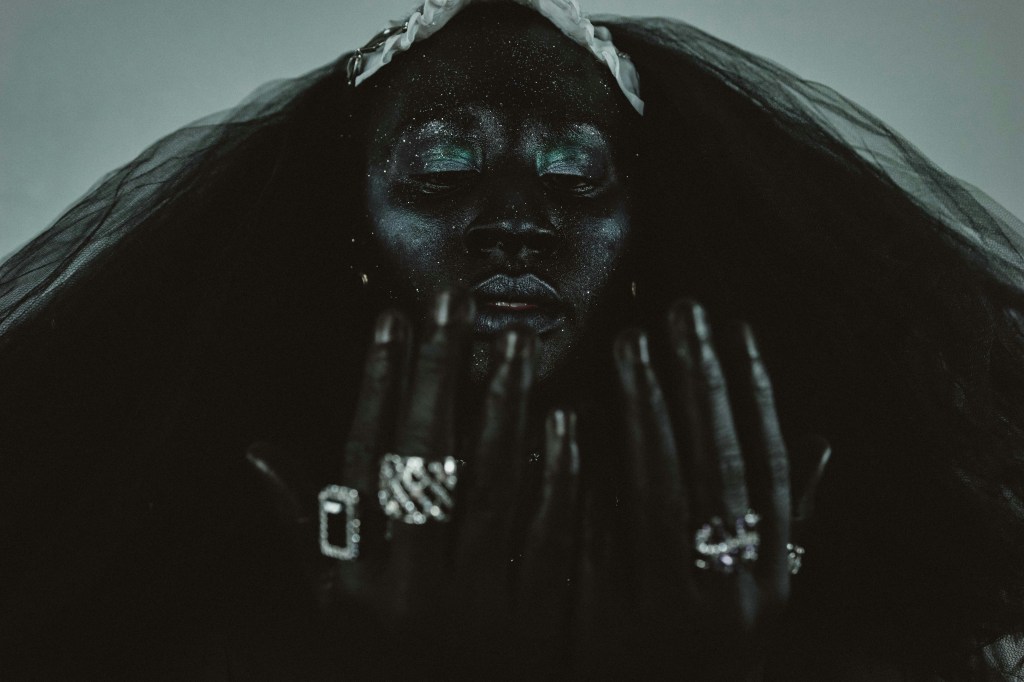
The Shape of Christian Imagination
Christianity has always understood the power of images, even when it claims to distrust them. For millennia, long before mass literacy and most believers had the ability to read a Bible, theology was mediated through art, iconography, and the embodied presence of those who preached its stories. The Christ who gazed down from medieval altarpieces and Renaissance frescoes was not a brown-skinned Palestinian Jew shaped by Roman occupation, but a white, serene European man, often fair-haired, often regal, often unmistakably familiar to those in power.
This is not a trivial historical curiosity. Images do not merely reflect belief, they train it. They shape what feels natural, what feels authoritative, who is intuitively recognised as worthy of obedience, and who we must police.
I’ve started thinking of the Christian story less as “Father, Son, and Holy Spirit,” and more, at least in its lived, embodied reality, as Mother, Son, and Holy Ghost. The God we say we worship, the Christ we say we follow, and the sacred presence we claim to carry. Because before there is theology, there is a woman’s body. Before there is a cross, there is a womb. And before there is doctrine, there are communities deciding whose bodies are honoured and whose are disciplined.
I used to tell myself that naming patriarchy in Scripture was an anachronism. But the truth is, I wasn’t protecting the Bible, I was protecting the comfort that came with not interrogating how its authority had worked in my favour. This is not an attempt to score points against Christianity, nor to caricature people who still find life and meaning within it. It is a reflection written from inside a long, slow deconstruction. One that required me to reckon not only with what harmed me, but with what quietly benefited me. As a Black man, I know what it means to live under hierarchies that diminish. I also know how easy it is to overlook the hierarchies that elevate you. Patriarchy has been one of those blind spots for me. This piece names that honestly, without pretending neutrality or innocence.
So if we’re going to stop telling comforting stories about faith, stories that keep power intact, we have to start with an uncomfortable question. Would Christianity have spread as successfully if its central figures, God, Christ, ecclesiastical authority itself, had been coded differently?
If Jesus had been consistently portrayed closer to his historical reality, or if the God of the Hebrew Bible had been imagined, named, and prayed to as female, would the faith have embedded itself so seamlessly into imperial, patriarchal societies?
And perhaps more pointedly, how much of Christianity’s endurance has depended not on its moral vision, but on how neatly it aligned with existing structures of white, male power?
I know how this can sound. Like modern anxieties being smuggled into ancient texts. But I reject the notion that respecting Scripture’s geographic and chronological context must be incompatible with listening to who those Scripture’s interpretation has most burdened.
I recently read Benjamin Baker’s reflection on Black Adventist history, where he argues that the clearest mirror a tradition can look into is the people it put at the edges. That idea has resonated with me, because I know what it is to live on the underside of power, and I also know how easily I can miss where I’m centred as a man. Once you start reading from the margins, the story changes. Or maybe the story stays the same and you begin noticing which bodies are forced to bear the weight of its structures.

 f2PointEight
Leave a comment