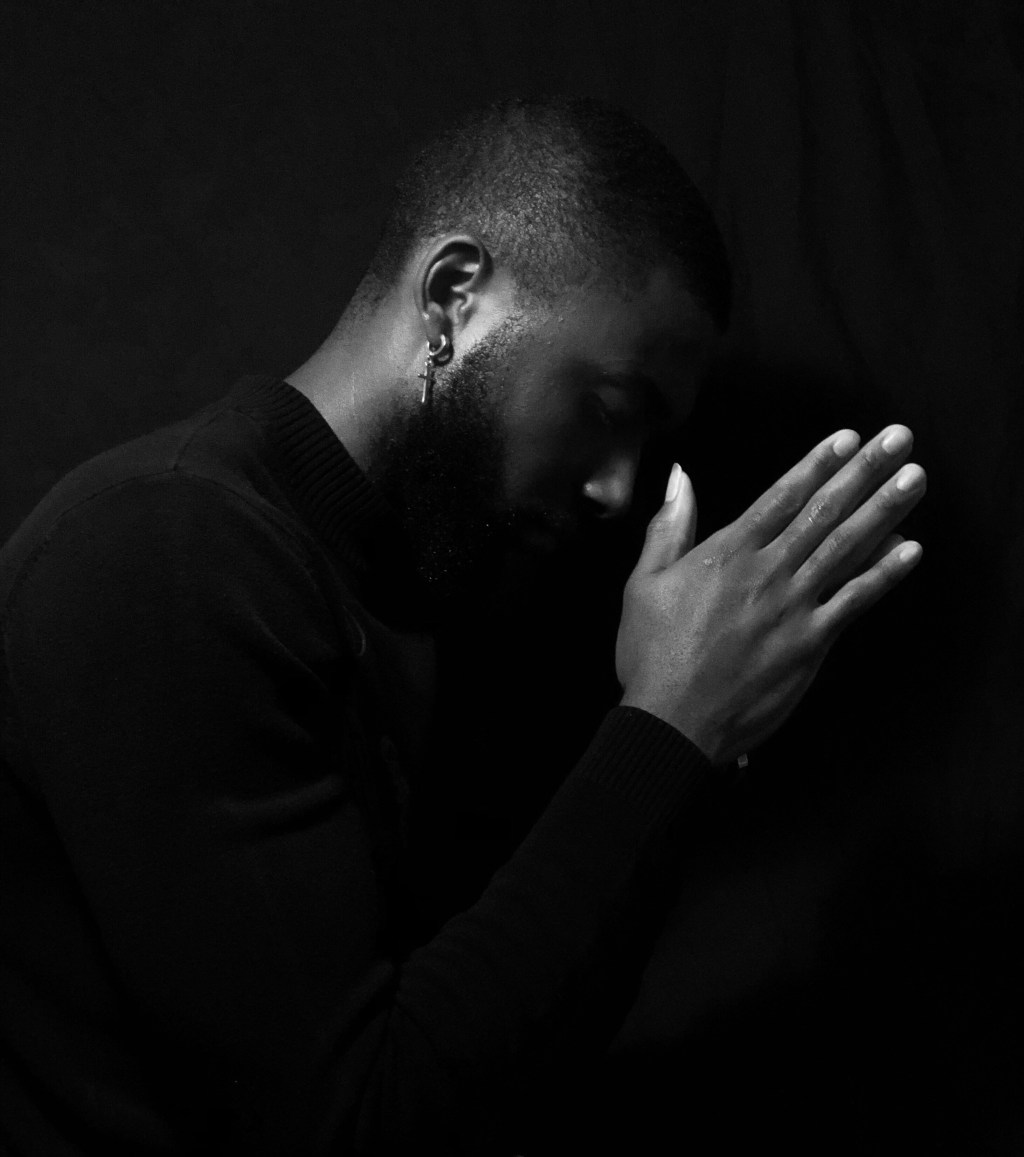
I have spent my whole life in church – a born-again, Bible-studying, multi-generational Christian. I heard the stories about how ‘so-and-so’ stopped going to church, or ‘such-and-such’ was no longer a Christian. Never in a million years did I think those are the stories others might hear about me. I have always had questions about faith, science, or whatever Bible story I thought didn’t quite add up, but I was always committed to my belief in God and the Bible as his inspired word.
So why am I leaving Christianity, and why am I telling you about it?
I’m not going to list every contradiction in the Bible or recite scientific evidence against the traditional Christian worldview. Instead, I want to make a simpler point: The God of Christianity is one we have created to suit our own ends of structuring social, political, and religious power. And here is why I say that…
Faith is an inherently anti-intellectual exercise.
During the recent 62nd General Conference Session of the Seventh-day Adventist church in July 2025, I listened as Ted N. C. Wilson, Former President of the Seventh-day Adventist Church, claim boldly that, “In no way does the Seventh-day Adventist Church put scientific information, peer reviewed scientific information, above the Bible or the Spirit of Prophecy [the writings of Ellen G. White] or even equal to those. Absolutely not!” For context, this was part of his response to a query about statements released by the church relating to vaccinations.
I remember at the time being stunned by such an admission, but the reality is that it was entirely consistent with my experience of faith. Questions are often met with the same regurgitated responses, ‘…lean not on your own understanding…’ Proverbs 3:5, ‘…my [God’s] ways are higher than your [human] ways…’ Isaiah 55:8-9, or ‘…faith is the confidence in what we hope for and the conviction of things not seen…’ Hebrews 11:1-2. We are taught to not only deny but actively distrust the evidence of our observed reality when it presents conclusions that conflict with our Christian worldview. We traffic in conspiracies which, at their core, posits that a global cabal of subject-matter experts, non-Christian faith leaders, and scientists exist for the sole aim to lead Bible-believing Christians astray through misinformation.
I watched how my church and fellow Christians responded to the groundbreaking work of scientists, medical researchers, and the entire immunology discipline during the COVID-19 pandemic. Practically foaming at the mouth imbued with righteous zeal, Christian communities provided fertile ground for spurious claims that the vaccine contained the cells of aborted foetuses, or that it caused more deaths than the disease itself, or that it was the Mark of the Beast.
My great grand aunt passed away in 2000, but I remember her fondly. Her house was filled with antique electronics, and her living room contained a six-foot tall grandfather clock that chimed every 15 minutes. She made the best chicken soup I ever tasted and helped a six-year-old me overcome my crippling fear of thunder. She also had Polio.
Her immobile feet turned inwards, and her toes curled under the balls of her feet. Completely reliant on a walker, her slow, deliberate shuffle often meant a journey from any part of the house to the toilet could take upwards of 15 minutes. The soft scrape of her feet across the hard-tiled floor as she drifted from room to room lingers in my memory as dearly held as the sight of my parents’ wedding in her front yard, or the evenings I spent on her veranda reciting the days of the week with the sounds of crickets chirping in the background. Most of you living in the developed world will never have seen the effects of Polio, or Smallpox. These diseases were rife in the first half of the 20th century and prior but have now been virtually eradicated through vaccination.
It sends chills through me whenever one more church aunty fills the WhatsApp group with yet another ‘natural cure’ for cancer, or a church uncle feeds the group’s persecution fetish with the latest conspiracy theory about the anti-Christ and the coming apocalypse. I’m still old enough to remember when Christians launched a global boycott of Procter & Gamble’s products because a barcode contained three consecutive sixes. These may seem laughable in hindsight, but they reveal something darker – a deep-seated willingness to embrace fear and fantasy over evidence, and to baptise paranoia as faith. In this way, conspiracy doesn’t just live on the fringes of Christian culture, it is woven into its imagination.
Rather than examining our beliefs against the reality we observe, we fixate on a distrust of science and treat sincere questions about faith as spiritual attacks. We frame them as problems we believe can only be solved with a prescribed formula of prayer and a selective mix of Bible verses.
Here’s the rub… despite being taught that certain questions should be avoided, prayed away, or dismissed as divine mysteries beyond our understanding, real answers do exist. The trouble is, those answers often contradict the very narratives the church has long upheld as truth, and they function as an inconvenience for those invested in preserving its formal structures. At first, encountering those answers was a deeply unsettling and terrifying experience. But it also forced me to confront my own cognitive dissonance and to decide whether I could continue to hold these Christian beliefs as true in light of the reality we see around us.
Now that I’ve explained why Christianity is not a reliable path to discovering truth, I want to draw a clear distinction between truth and meaning. We all seek out meaning and purpose for our lives, and far be it for me to criticise anyone for doing so. With that said however, a search for truth is concerned with what actually aligns with reality, regardless of how uncomfortable or inconvenient it may be. A search for meaning, on the other hand, is about finding comfort, purpose, and a sense of coherence with your identified community even if it requires bending or ignoring reality.
This leads me to the second part of my initial question: why am I telling you I am no longer a Christian?
Christianity thrives on faithfulness to the group, not to God.
Over the past couple of years, I’ve deliberately stepped back from social media and online spaces. Too often, what could be meaningful conversations quickly devolve into toxicity. People aren’t really listening or seeking understanding, we’re just swinging our opinions like weapons, trying to bludgeon each other into submission. Over the past eight or nine days especially, this has become even clearer to me.
That’s why I’ve made it a principle to no longer comment online about politics, religion, or social issues – this post being the exception to that, of course. These exchanges aren’t about searching for truth; they’re about defending the identity groups we’ve tied ourselves to. No matter how strong the evidence or how persuasive the reasoning, what usually happens is the opposite of persuasion, and people dig their heels in even deeper, becoming more entrenched in the worldview they already held.
As Christians, we are taught to prioritise the search for meaning while conflating it with truth. We do this by convincing ourselves that what feels purposeful must also be real. This conflation not only distorts our own understanding of the world but also leads to viewpoints and actions that fundamentally betray the concept of God preached by Christians in deference to institutional loyalty. And there’s a psychological reason for this. As human beings, we are wired to seek out community. In pre-agricultural times, isolation from the group wasn’t just lonely, it was lethal. Our survival depended on belonging. That survival instinct lingers in us, and it makes loyalty to our chosen group sacrosanct. So, when someone challenges our worldview, it doesn’t just feel like an intellectual disagreement, it feels like a threat to our very safety, as though changing our minds would mean betraying the tribe and endangering ourselves.
Even now, in a world where physical survival no longer depends on the group, the instinct remains. Fidelity to the group provides meaning and identity, and for many people, that sense of belonging outweighs any commitment to truth. In practice, this means our psychological need for affiliation often wins out over the harder, lonelier pursuit of reality.
And this is the bitter irony… in elevating loyalty to the group above loyalty to truth, Christians are not being faithful to God at all, we are being faithful to the tribe. This misplaced devotion fuels a culture where people believe things Jesus never said, defend doctrines that distort the character of the God we claim to worship, and perform acts that stand in direct opposition to the love, justice, and humility we claim to revere. Worse still, church culture not only permits this but depends on it, rewarding conformity, stigmatising dissent, and teaching that questioning the group is the same as questioning God. In doing so, the institution itself becomes an idol. It demands allegiance that (according to the religion) should only be given to God, while training its members to conflate obeisance to the church with submission to Him. In clinging to the security of belonging, Christians trade away the very truth our faith is supposed to rest upon, and end up worshiping community itself rather than the God we profess.
Christianity harms all of us.
The loyalty Christians prize so highly does not come without a cost. In the name of preserving unity and cohesion, the church has too often chosen silence where it should have spoken, and allegiance where it should have resisted. Instead of standing with those oppressed, Christians have frequently aligned themselves with the very structures of power that perpetuate injustice, seeking legitimacy in the eyes of those with influence, governments, and institutions, even when those powers have inflicted untold harm. The tragedy is that what is celebrated as ‘faithfulness’ or ‘unity’ often amounts to complicity – a willingness to sacrifice justice on the altar of belonging. And in doing so, Christians harm not only those outside their walls, but also those within, teaching generations that loyalty to the group matters more than loyalty to truth, conscience, or even God Himself.
On 25 May 2020, a store clerk in Minneapolis, Minnesota, called the police after suspecting a customer of using a counterfeit $20 bill. What followed shocked the world: the widely circulated footage depicted a white police officer kneeling on George Floyd’s neck for more than nine minutes, long after he had lost consciousness, stopped breathing, and died. The $20 bill, it later turned out, was genuine. Only two months earlier, on 13 March, seven police officers had blindly fired 32 rounds into an apartment in Louisville, Kentucky, killing Breonna Taylor, a young emergency room technician. The warrant was obtained under false pretences, the officers forced entry without identifying themselves as law enforcement, and they initially faced no criminal charges for their conduct. These killings were not isolated events. They followed the long line of names – Tamir Rice, Michael Brown, Eric Garner, Freddie Gray, Philando Castile, Elijah McClain – each another grim reminder of how often black lives are treated as disposable in encounters with the state.
The protests that followed galvanised under the banner of Black Lives Matter and became a cultural zeitgeist moment, demanding accountability and exposing the deep racial inequities woven into the fabric of society. And yet, in the face of this cultural reckoning, I saw my own church and many others like it move not toward repentance, lament, or solidarity, but toward silencing. Calls for justice were drowned out by calls for ‘unity.’ In an institution which preserves race-based segregation, where ‘white churches’ and ‘black churches’ are normative, conversations about race were shut down in the name of keeping the peace.
This should not have been surprising to me, as the Seventh-day Adventist church and its members historically aligned themselves with Hitler and the Nazi regime. Many Adventist students joined Nazi organisations like the Hitler Youth and the Association of German Girls. The German church even allied itself with the National Socialist People’s Welfare (NSV) and became an approved organisation for social services.
In his book, Theologians Under Hitler, Robert Ericksen, writes: “The Germany that Hitler led remained 95 percent Christian and 55 percent Protestant”. The magnitude of this complicity is chilling. Christians not only helped bring Hitler to power, but many celebrated his rise to the Chancellery in 1933 as a new dawn for their faith, turning a blind eye to the venomous racial ideology he espoused. Even more damning, the Christian majority stood silently as the Jewish minority, who had contributed so richly to German culture, had their rights stripped away, their humanity denied, and their lives imperilled. In this silence, the moral failure is staggering – a community professing love, justice, and compassion betrayed those very principles in the name of convenience, conformity, and perceived unity.
Reflecting the widespread approval of Hitler’s ascent, Adolf Minck, then President of the Adventist Church in Germany, expressed his satisfaction with Hitler’s election in the August issue of Advenbote, the official publication of the German Seventh-day Adventist Church at the time: “A fresh enlivening, and renewing reformation spirit is blowing through our German lands… this is a time of decision, a time of such opportunities for a believing youth as has not been for a long time…. The word of God and Christianity shall be restored to a place of honour.” Far from standing alone in this endorsement of Hitler, another prominent leader in the church named Wilhem Mueller, encouraged Adventists to adopt the Hitler salute and Nazi flag salute. He even went so far as to label Hitler as “chosen by God” for the office of Chancellor and praising his similarity with Adventism’s health reform: “As an anti-alcoholic, non-smoker, [and] a vegetarian he is closer to our own view of health reform than anybody else”.
Jews were not the only group to suffer under Hitler’s regime. LGBTQ+ people also faced brutal persecution, imprisoned, tortured, and killed simply for existing. This persecution did not occur in an a-religious vacuum. For centuries, Christians have perpetuated profound hostility toward LGBTQ+ individuals, through social condemnation, legal sanctions, forced conversion efforts, and exclusion from communities of faith. Religious rhetoric has often painted queer identities as sinful or unnatural, reinforcing stigma, justifying discrimination, and making it far easier for societies to treat LGBTQ+ people as less than human.
In 2015, the Seventh-day Adventist General Conference voted against allowing individual regions to ordain women. A decision which still stands today. Local conferences across Ohio, Colorado, Wyoming, and Utah refused to comply with the decision of the global church, a decision that was met with strong opposition from members who viewed it as a breach of denominational unity. Even now, when considering the role of women in church, the home and wider society, texts commanding women to be silent in church (1 Corinthians 14:33-36), or claims that a man functions as the head of every woman (1 Corinthians 11:13) is never far from the lips of Christians.
Patriarchy is woven deeply into the fabric of Christian tradition, shaping both the structure of the church and the lives of its adherents. From leadership hierarchies that systematically exclude women to scriptural interpretations that prescribe rigid gender roles, Christianity has historically reinforced male authority as divinely ordained. The impact of this is profound and women have (and continue to be) marginalised within faith communities. Their voices and agency constrained, while men are often socialised into narrow definitions of power, dominance, and emotional restraint. Beyond the church, these patriarchal norms ripple into society at large, legitimising gender inequality, influencing family dynamics, workplace cultures, and public policy, and perpetuating cycles of control, exclusion, and violence. In this way, the patriarchal structures of Christianity do not merely reflect society, they actively shape it, embedding inequity into both spiritual and social life.
It’s clear that for much of their existence, Christians have reinforced the divisions of the world rather than healed them. Rhetoric about unity in such a context does not bridge divides, it entrenches them. It becomes a way of preserving the status quo, ensuring that those in power are never unsettled, and that those harmed by injustice remain unheard. In this light, the church’s unity is not the unity of Christ, but the unity of silence. It’s the kind of unity that protects institutions over people, comfort over truth, and cohesion over justice. It is a unity that asks the oppressed to bear the weight of their oppression quietly, for the sake of the fragile peace of the powerful.
Christianity is a theatre of righteousness.
Too often, the moral fervour of Christians is selective, calibrated not by the scale of injustice, but by how it serves our social, religious, or political agenda. We are quick to thunder against the evils that reinforce our preferred hierarchies, yet remain silent, or worse, complicit, when confronted with wrongs that challenge our power, privilege, or comfort. The result is not a pursuit of justice, but a theatre of righteousness, outrage performed for effect, morality weaponised to preserve influence, and conscience subordinated to convenience. In this pattern, Christianity becomes less a guide for universal ethics and more a tool for shaping the world to align with the interests of the faithful.
I have written about how history offers glaring examples of churches cheering or remaining silent on functional segregation, the rise of authoritarian regimes, and prioritising unity and institutional loyalty over confronting injustice. In the contemporary era, this selective outrage persists as Christian communities remain silent and ineffective on the real issues that plague our society.
On 27 November 2000, a bright and curious boy named Damilola Taylor, was making his way home from the local library. Aged just ten years old, Damilola had moved to London from Nigeria with his family just three months prior. Wearing a silver rain jacket, he walked alone along the damp streets of Peckham. Somewhere along that route, a group of boys aged between 12 and 14 attacked him with a broken glass bottle in an unprovoked act of senseless violence. Damilola, was stabbed in the leg, severing his femoral artery. He struggled to a nearby stairwell where he collapsed, bleeding. Neighbours and passersby rushed to help and he was taken to the hospital, but the injuries were too severe. He died in the early evening, leaving a stunned and grieving community behind.
Damilola’s young life was cut tragically short just a few hundred yards from his home.
I remember at the time watching the news, rocked to my core by such a callous attack. It was the first time I understood that the innocence of childhood could be stolen so brutally, and that those capable of such violence could themselves still be children. Unfortunately, Damilola’s story is not unique and more than 265 children aged 13-18 have been murdered in London in the intervening 25 years.
I have long been deeply unsettled by the near complete silence of my church on these issues. We have had within our congregations, both victims and perpetrators of such violence, yet the work of seeking to understand the causes of such evil and offering a sanctuary from it has fallen exclusively to a few passionate community activists. Pastors stand in their pulpits preaching abstinence from sex but fail to impact the wider community suffering from the perils of youth gang violence.
We condemned the heinous terrorist attacks perpetrated by Hammas on 7 October 2023, but ignore the plight of innocent women and children suffering a sustained extermination carried out by the Israeli state. We rend our souls in endless commentary and diatribes over the assassination of a right-wing social media influencer on a Utah college campus, but make no attempt to even acknowledge, let alone offer insincere platitudes, thoughts, and prayers for the two students shot in a Colorado High School exactly 1 minute later – the 47th school shooting in America this year.
The pattern is unmistakable. Our moral outrage is not guided by justice, compassion, or the scale of human suffering. It is selective, performative, and aligned with the agendas we find convenient. We elevate certain tragedies to the pulpit while ignoring others that demand the same moral courage. We cry for victims when it suits our worldview, and remain silent when confronting systemic evils which challenge our comfort, our institutions, or our power. This selective fidelity to morality exposes a profound hypocrisy, where faith is celebrated not as a compass for universal justice, but as a tool to reinforce the structures and narratives we already favour.
And in that silence, countless lives, children like Damilola, victims of violence, oppression, and neglect, are left to suffer alone, while the faithful maintain the illusion of righteousness from a safe distance. We have turned the pursuit of justice into a curated performance that protects the status quo.
Conclusion
Faith, as I have lived it, too often asks us to worship not God, but the comfort of the tribe, the security of institutions, and the illusion of righteousness. It celebrates selective outrage while ignoring the suffering it cannot conveniently confront. Children like Damilola Taylor die, communities endure oppression, and injustice festers. All while the faithful perform morality as a theatre, shielding themselves from truth and conscience alike. The tragic irony here is that Christianity claims to be the way of Jesus, but instead functions as a religion about Jesus, where his name serves as a mascot to sanctify a theological framework he neither taught nor lived. To leave this community is to step into loneliness, to surrender an identity you may have carried your whole life. I know that pain intimately.
For the Christians reading this, my aim here isn’t necessarily to demand that you embark on a journey to leave faith too. My motive is to invite you to examine not only what you believe, but what your belief produces in the lives of others. I challenge you to ask whether your faith reflects the justice, humility, and compassion you claim to revere, or whether it merely protects your comfort.
In the end, Christianity only ever had to clear a simple bar: is it true, and is it good? For me, its failure on the first challenge was already a foregone conclusion. And so the focus of this essay is on examining whether it is good. Sadly for those under its sphere of influence, we must conclude that it fails just as completely on the second. Because if the Christianity you practice cannot demand justice where it is hardest, if it cannot elevate truth above comfort, then it cannot be considered a guide to righteousness at all. It is a mirror, reflecting our fears, our loyalties, and our willingness to sacrifice the vulnerable for the sake of belonging. And thus, we make religion itself our god, fashioning it in our own image.
“The people that built their heaven on your land are telling you yours is in the sky.” – Nina Simone.


 f2PointEight
Leave a reply to Steven Hulbert Cancel reply